

order:123 or chat:room-1, then receive database changes, broadcasts, and presence updates over WebSockets. Channels can also fan out the same messages to webhook URLs when another service should receive the event.
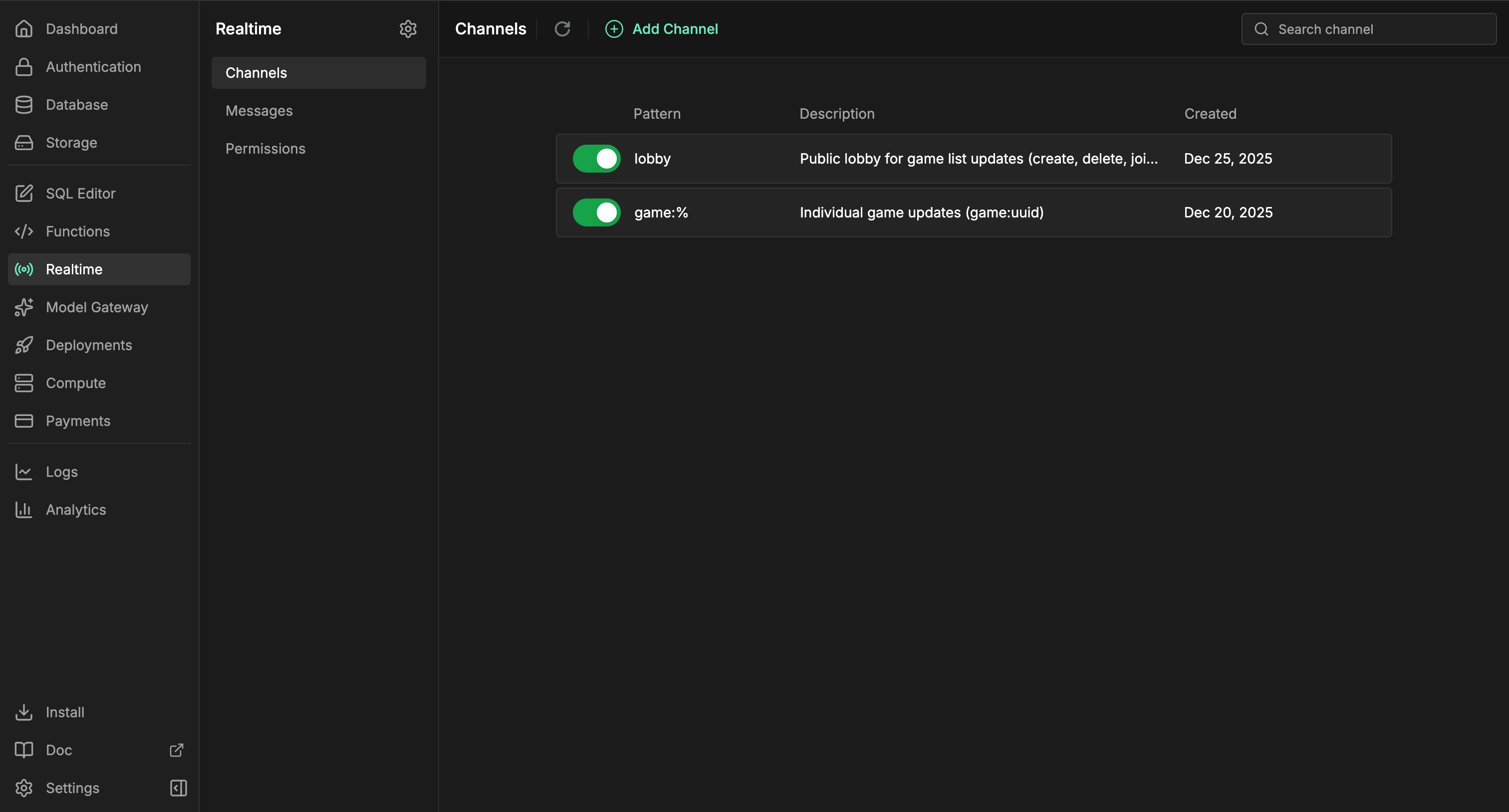
Realtime dashboard: channel patterns, message history, permissions, and retention settings.
Need server-side code to run after a database change? Put that business logic in an Edge Function and invoke it from a database trigger. Use Realtime when the change should be delivered to connected clients or configured webhook endpoints.
Features
Channels
Channels are named topics that clients can join. Use exact names for shared rooms, or patterns likeorder:% when every record needs its own live stream.
Database changes
Use database changes when a table write should become a live app event. Create a trigger on the table you want to watch. In its trigger function, call the predefinedrealtime.publish(channel, event, payload) function to decide which channel receives the message, which event name clients handle, and what payload they receive.
For a channel pattern such as order:%, a trigger can publish one event per order:
Client broadcasts
Clients can publish messages to channels they have already joined. Use this for chat, typing indicators, cursors, collaborative editing signals, and other user-to-user updates that do not need to start from a database write.Webhooks
Attach webhook URLs to a channel when another service should receive each message. InsForge posts the event payload to every configured URL, includes headers for the event name, channel, and message ID, retries transient network failures, and records webhook delivery counts in message history.Presence
Presence tracks who is online in a channel. Clients receive the current member snapshot when they subscribe, thenpresence:join and presence:leave events as members come and go. Store durable room membership, roles, and permissions in your own tables; presence is only online state.
Row-level security
Realtime can be open while prototyping, then locked down with Postgres RLS. UseSELECT policies on realtime.channels to control who can subscribe, and INSERT policies on realtime.messages to control who can publish from a client.
This policy lets authenticated users subscribe to order:<id> channels only when the order belongs to them:
realtime.channel_name() in subscribe policies because clients subscribe to resolved channels such as order:123, while realtime.channels stores patterns such as order:%.
Message history
Every delivered event is recorded with WebSocket and webhook delivery counts. The dashboard can inspect recent messages, delivery stats, and retention settings when you need to debug live behavior.Build with it
TypeScript SDK
Subscribe to channels, publish events, and track presence from Node, browser, and edge.
Swift SDK
Native Swift realtime client for iOS and macOS.
Kotlin SDK
Coroutines-first realtime client for Android and JVM.
REST and WebSocket API
Use the raw Socket.IO contract from any language.
Next steps
- Set up the CLI to link your project.
- Create channels in the Realtime dashboard.
- Use the TypeScript SDK reference for client subscriptions.
- Add webhook URLs to a channel when another service needs the same event stream.